I have a sort of hangover from growing up in poverty. Consequently, there are things people who grew up in other socioeconomic climes expect to be normal for a household that will not be normal for ours. It's hard to place value on things if you've managed your entire life without them.
I do not think my list will be consistent with other poverty stricken homes - we were just a bit poor. But I think it might be an interesting insight nonetheless and was inspired by a fantastic article I read yesterday.
 1) Tissues
I have never lived with tissues. Never ever. I even felt resentful recently buying tissues for Kindy when a tissue donation was asked for (but I did it anyway because those kids are germ bags and we can afford to donate more easily than some other Kindy families). What is wrong with using toilet paper? If you come to my house and ask for a tissue and then look dismayed when I say I don't have any, please don't be offended if I flick you a bit of stink eye. I have offered you paper of a marginally different quality. You can still wipe your nose with it. I offered to help with your nose leakage. I am a good hostess.
The same goes for paper towels. I have to admit, recently I did start buying paper towels because they are quite handy for some things - especially now we have kids, but I cannot say I don't look at them and see them as a reminder in my class shift. Even if they are Budget brand.
2) Icecream
We don't carry icecream. We never had icecream growing up unless we were visiting Grandma Thompson's house. Then we'd have a slice from a cardboard box of vanilla icecream after lunch as was her tradition. And we did have it on special occasions. The no icecream thing wasn't just a money thing - it was a living-in-an-isolated place thing. Like, it would melt by the time we got home so it was pretty pointless buying it.
When I was a teenager, a while after my parents separated, we were slightly better off financially. Mum would buy icecream (neopolitan) - I think it was to make up for our less privileged childhood - but it would sit in the freezer uneaten until it went icy. Well, sometimes the chocolate would get eaten but not the rest. The thing was that we were so unused to having it that it felt weird to have it so we would forget we had it, or feel strange about having it. Icecream was just stressful.
Today, we don't usually* have icecream in the freezer because we have a tiny freezer which needs to accommodate other more important items - like frozen meals and sausages (now that I've bred minions that eat mostly sausages). And because it does still kinda stress me out.
3) Oranges, grapes and berries Gooseberry gathering
 I think this may still resonate with maybe the older generations. I used to just have oranges at Christmas. I'd get one in my Christmas stocking and it was a treat. Consequently, I think I'm programmed to see oranges as a rich person food and something only for special occasions. I like oranges. I don't think they're the best fruit around, but they are nice and refreshing and enjoyable. Our house has an orange tree. It produces pretty good oranges. I STILL struggle to eat them.
And grapes and berries** were totally the realm of the rich. We only had them at parties hosted by other people and for fear of eating too many and being reprimanded I just left them alone. I struggle to eat grapes now (I actually hate the texture of their skins and pips), but berries have come a little easier.
This has been aided by my decision to start a berry patch. After realising they grew well under the orange tree, and seeing how much our kids enjoyed picking them (as I also did as I child) I thought this a marvelous plan. It currently homes cape gooseberries, blueberries and a thornless boysenberry, and we've JUST put in strawberries - so will hopefully have a berryful Summer. We can do this though because we are lucky to be home owners and live somewhere with good soil.
4) Any green vegetable we didn't grow ourselves
Apart from frozen peas (which I despised). Otherwise we just had silverbeet and in Summertime sometimes beans. I don't think I had broccoli until I was a teenager. Or spinach. I adore both. I still won't buy either unless they hit a magical price number I have stashed in my brain. If it's on special I will buy extra for my Mum.
The plus side of this is that as a grown up I have a garden abundant with simple greens - silverbeet, spinach and kale. And instead of icecream our freezer teams with blitzed silverbeet - handy for making lasagne, ravioli and saag aloo. And free and nutritious.

This will have been a combination of having not a lot of money, and also being country folk who grew up in the women-bake-for-the-shearing-gang kind of mentality. Mum made bread, scones, pikelets, peanut brownies, louise slice, albert slice, ginger slice, animal biscuits (my childhood favorite - chocolate with a hint of spice) and rice bubble squares.
We had no need for such things as bought biscuits. I felt pretty spoilt. Shop biscuits were reserved for times of year like Christmas, where someone in the family would no doubt gift us one of those Sampler boxes and we'd argue over who got the biscuits with real chocolate on them.
6) Chicken
Are you fucking kidding me? That shit was expensive! Besides sausages and mince, I don't think we really bought meat. We just got whatever we were allowed from the farm. And a few times we kept our own pigs, so had pork and bacon and stuff. But chicken was for fancy people because they came from the shops. Because if you've ever eaten one of your hand raised chickens you will know that they taste very different to what comes from Tegal. And not in a good way.

7) School trips & Extra curricula activities
Kids at my school went to swimming lessons. They studied piano and gymnastics and dance. Living in an isolated area on a limited income meant this was just not possible for our family. My extra-curricula time was spent in the school library reading or playing computer games or writing kiddy novellas whilst Mum cleaned the school (she was the cleaner). When a brownie troop started up locally though, I was allowed to go! This was a definite highlight of my childhood. I felt very lucky. There were still no local extra-curricula activities for the boys in our area.
We didn't miss every school trip. But we couldn't afford to go on the bigger ones. The senior school at my teeny tiny primary school went to the Whakapapa ski fields one year. I couldn't go. I was not alone, but there were only a few of us who couldn't (it was a high decile school). Things like this fed into the thinking that we were different to our peers - those shared experiences that we missed out on.
I have still never been to the snow. Truthfully though, I don't think I'd like it. I suspect it's very cold.
* * * * * * * * * * *
So these are the things I remember. I had a pretty good childhood, and would have actually been relatively unaware of most of the things my parents struggled with. We also didn't often eat out, or have sweets, or have takeaways - but this hasn't really seemed to impact on my psyche too much. I remember that food was harder to come by when Dad took a break from farming for a bit (no free farm meat) and our diet shifted significantly. We were lucky that my parents often worked in jobs where they got food on the side - orchards, market gardens and the local venison farm Game Meats.
Mum and I have talked about this quite a bit. And I think it would be helpful to contrast my list with some of the things she finds hard to afford now living alone on a benefit today. I have summarised a little as her list was understandably long.
 1) Choice
When you are poor, you have less choice. It doesn't matter how ethical you are, or wish to be - there is no way you can afford things like eco-products or free range eggs or olive oil. You can never afford to buy premium brands because every cent counts and is counted. Mum usually cooks a family size meal and eats the same thing for dinner 3 - 4 nights in a row as she has little freezer space to store meals. It is boring, but it is the most affordable way to eat nutritious and filling meals.
And if you are tired and don't want to cook, you can't just get takeaways or go to a restaurant because it's just not financially feasible. As a treat Mum will sometimes get some hot chips, but that's about it.
Hot chips are a treat
2) Technology
Internet, smartphones, Freeview - these are all things Mum doesn't have that most of us take for granted. We tried to help get her set up with Freeview - bought a Freeview box and a newer TV (she had an old style boxy one) and a super aerial thing, but because of where she lives - still no Freeview. It costs about $300 to have a proper aerial installed which she can't afford - and we can't afford to do for her either - especially because it's for a rental property that she may have to leave at any given time.
And internet... To use this at home, she needs a smartphone as this is the only affordable way she could manage it. Mum can't afford to buy a smartphone. Yes, these days you can get them for $40 - but this is still $40 she does not have, and is double the price of a non smart-phone. And yes, you can get a basic Skinny package for $16 per month which includes 1GB of rollover data - but that's still $4 less per week to spend on food. This is still out of reach for lots of people. Yes, Mum can access the internet at her local library (and does). This is not remotely the same as having internet on hand 24/7.
3) Snacks
It is hard enough to afford meals let alone things to eat in between. You just have to eat less. Mum doesn't eat breakfast either (although to be fair, I can never remember her eating breakfast - might be something similar to me and oranges). And even though we live in a country which grows some amazing produce, fruit is unaffordable - especially outside of the peak harvest seasons of Summer and Autumn. So while this should be a good snacking option, it's just not easy to do for half of the year.
4) Cleaning, sanitary and skin care products
When you have a teeny wee food budget, buying things that are non-food can cut out a lot of money you could use on veges or bread. Mum also has a citrus allergy, so can't buy a lot of the cheaper cleaners or even basic hair care products because they are lemon, grapefruit or lime based and cause her skin to peel off and give her a hayfever type reaction. She doesn't have to buy fancy ones, but just regular priced cleaners are usually at least $4, which is still unaffordable.
And moisturiser? Even the cheap one that we use (which is Olay for sensitive skin) costs about $12 a bottle. And even if that bottle lasts for ages, you still have to come up with the $12 in the first place. Which might mean buying no eggs or cheese for two weeks (which is Mum's main source of protein as she is vegetarian).
5) Money for leisure
It is hard to have hobbies, because most of them cost money. Mum can't afford to go swimming let alone join a gym. Even baking biscuits costs extra - especially with the cost of butter these days. She cannot go 'get her hair or her nails did' - she can't afford haircuts at all. Same goes for shopping for new clothes. She cannot afford to travel - even locally - because petrol is expensive. Mum can barely afford craft supplies from $2 shops to make things at home with***.
 6) Prescriptions and Pet care
Mum has a permanent disability but is not on a sickness benefit because they no longer exist (they have been absorbed into the 'jobseekers benefit'). And even though she has had three failed surgeries (and one upcoming), her GP will not sign her off onto an invalids benefit even though simple things - like walking - can be difficult for her on bad pain days.
Because she has no dependents, in order to be eligible for the prescription subsidy, she needs to get 20 prescriptions per year for herself. This is $100 worth of prescriptions - and that's just if the medications are already subsidised. This is on top of GP costs. Sometimes she cannot afford to fill her scripts and has to wait, in pain, until she can afford to. This is not uncommon for people on benefits.
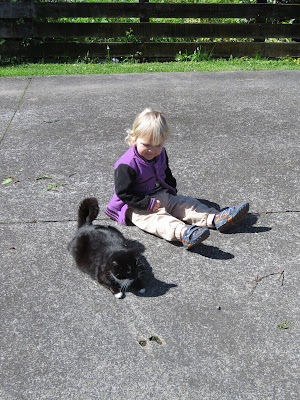
Equally, taking her cat to the vets is very difficult. Vet bills are expensive and unpredictable (we spent over $3000 on a rabbit who was then euthanised...) I do not feel it is fair to say poor people cannot have pets. Mum lives alone. Humans need comfort from other animals. Remember Maslows monkeys? Having pets is now thought to promote longevity in humans and more and more hospitals and rest-homes now use pet therapy. When life is hard, a little warmth is important.
7) Electricity and water
Speaking of warmth, Winter is especially hard because it is cold. Mum is aware of how much power costs, so uses it sparsely, which means she doesn't use a heater even though her home is cold and uninsulated. The same goes for water. Washing is done sparingly and showers are minimal.
* * * * * * * * * * * *
So yep. It's a pretty grim picture, and Mum's current concerns make my childhood ones appear silly. The truth is that our cost of living has skyrocketed, and benefits and incomes have not kept up.
Whilst there has been much debate about this number (and I'm going with the version from before the current government changed their parameters) 290,000 children currently live below the poverty line in NZ. This number The poverty they experience will be well beyond that I experienced growing up - likely much harder than what Mum experiences. She only does ok because she has support**** from her family.
There is a massive chunk of our society who do not get to experience the kind of lives many of us take for granted as 'normal'. And as inequality grows due to numerous factors, the future of these children, and their families seems bleak.
I am 36 and I still can't eat oranges. Oranges on our tree
Something needs to change.
* Sometimes we do because Murray likes to make icecream with the kids. Because we are lucky and can sometimes afford fancy icecream ingredients like cream and eggs.
**Besides blackberries, which in the 80's grew abundantly unsprayed on many a roadside and were delicious.
*** Mum's free leisure activity is reading books and getting out documentaries from the library (which are also free). She also does the book run for her local rest home and spends time with the residents there. And she helps me with the kids once a week and (when well enough) Grandma with her garden. In spite of having little financial wealth, Mum is an extremely giving person.
**** Mum is extremely grateful to receive varying forms of support from her family. I am extremely grateful to our family too, as the support we can offer Mum is there - but it is more limited than what would be ideal.
I do not think my list will be consistent with other poverty stricken homes - we were just a bit poor. But I think it might be an interesting insight nonetheless and was inspired by a fantastic article I read yesterday.
I have never lived with tissues. Never ever. I even felt resentful recently buying tissues for Kindy when a tissue donation was asked for (but I did it anyway because those kids are germ bags and we can afford to donate more easily than some other Kindy families). What is wrong with using toilet paper? If you come to my house and ask for a tissue and then look dismayed when I say I don't have any, please don't be offended if I flick you a bit of stink eye. I have offered you paper of a marginally different quality. You can still wipe your nose with it. I offered to help with your nose leakage. I am a good hostess.
The same goes for paper towels. I have to admit, recently I did start buying paper towels because they are quite handy for some things - especially now we have kids, but I cannot say I don't look at them and see them as a reminder in my class shift. Even if they are Budget brand.
2) Icecream
We don't carry icecream. We never had icecream growing up unless we were visiting Grandma Thompson's house. Then we'd have a slice from a cardboard box of vanilla icecream after lunch as was her tradition. And we did have it on special occasions. The no icecream thing wasn't just a money thing - it was a living-in-an-isolated place thing. Like, it would melt by the time we got home so it was pretty pointless buying it.
When I was a teenager, a while after my parents separated, we were slightly better off financially. Mum would buy icecream (neopolitan) - I think it was to make up for our less privileged childhood - but it would sit in the freezer uneaten until it went icy. Well, sometimes the chocolate would get eaten but not the rest. The thing was that we were so unused to having it that it felt weird to have it so we would forget we had it, or feel strange about having it. Icecream was just stressful.
Today, we don't usually* have icecream in the freezer because we have a tiny freezer which needs to accommodate other more important items - like frozen meals and sausages (now that I've bred minions that eat mostly sausages). And because it does still kinda stress me out.
3) Oranges, grapes and berries Gooseberry gathering

And grapes and berries** were totally the realm of the rich. We only had them at parties hosted by other people and for fear of eating too many and being reprimanded I just left them alone. I struggle to eat grapes now (I actually hate the texture of their skins and pips), but berries have come a little easier.
This has been aided by my decision to start a berry patch. After realising they grew well under the orange tree, and seeing how much our kids enjoyed picking them (as I also did as I child) I thought this a marvelous plan. It currently homes cape gooseberries, blueberries and a thornless boysenberry, and we've JUST put in strawberries - so will hopefully have a berryful Summer. We can do this though because we are lucky to be home owners and live somewhere with good soil.
4) Any green vegetable we didn't grow ourselves
Apart from frozen peas (which I despised). Otherwise we just had silverbeet and in Summertime sometimes beans. I don't think I had broccoli until I was a teenager. Or spinach. I adore both. I still won't buy either unless they hit a magical price number I have stashed in my brain. If it's on special I will buy extra for my Mum.
The plus side of this is that as a grown up I have a garden abundant with simple greens - silverbeet, spinach and kale. And instead of icecream our freezer teams with blitzed silverbeet - handy for making lasagne, ravioli and saag aloo. And free and nutritious.

Our silverbeet and kale (today)
5) Store bought biscuitsThis will have been a combination of having not a lot of money, and also being country folk who grew up in the women-bake-for-the-shearing-gang kind of mentality. Mum made bread, scones, pikelets, peanut brownies, louise slice, albert slice, ginger slice, animal biscuits (my childhood favorite - chocolate with a hint of spice) and rice bubble squares.
We had no need for such things as bought biscuits. I felt pretty spoilt. Shop biscuits were reserved for times of year like Christmas, where someone in the family would no doubt gift us one of those Sampler boxes and we'd argue over who got the biscuits with real chocolate on them.
6) Chicken
Are you fucking kidding me? That shit was expensive! Besides sausages and mince, I don't think we really bought meat. We just got whatever we were allowed from the farm. And a few times we kept our own pigs, so had pork and bacon and stuff. But chicken was for fancy people because they came from the shops. Because if you've ever eaten one of your hand raised chickens you will know that they taste very different to what comes from Tegal. And not in a good way.

The teeny tiny primary school I mostly went to. Lots of happy memories in the library here.
7) School trips & Extra curricula activities
Kids at my school went to swimming lessons. They studied piano and gymnastics and dance. Living in an isolated area on a limited income meant this was just not possible for our family. My extra-curricula time was spent in the school library reading or playing computer games or writing kiddy novellas whilst Mum cleaned the school (she was the cleaner). When a brownie troop started up locally though, I was allowed to go! This was a definite highlight of my childhood. I felt very lucky. There were still no local extra-curricula activities for the boys in our area.
We didn't miss every school trip. But we couldn't afford to go on the bigger ones. The senior school at my teeny tiny primary school went to the Whakapapa ski fields one year. I couldn't go. I was not alone, but there were only a few of us who couldn't (it was a high decile school). Things like this fed into the thinking that we were different to our peers - those shared experiences that we missed out on.
I have still never been to the snow. Truthfully though, I don't think I'd like it. I suspect it's very cold.
* * * * * * * * * * *
So these are the things I remember. I had a pretty good childhood, and would have actually been relatively unaware of most of the things my parents struggled with. We also didn't often eat out, or have sweets, or have takeaways - but this hasn't really seemed to impact on my psyche too much. I remember that food was harder to come by when Dad took a break from farming for a bit (no free farm meat) and our diet shifted significantly. We were lucky that my parents often worked in jobs where they got food on the side - orchards, market gardens and the local venison farm Game Meats.
Mum and I have talked about this quite a bit. And I think it would be helpful to contrast my list with some of the things she finds hard to afford now living alone on a benefit today. I have summarised a little as her list was understandably long.
1) ChoiceWhen you are poor, you have less choice. It doesn't matter how ethical you are, or wish to be - there is no way you can afford things like eco-products or free range eggs or olive oil. You can never afford to buy premium brands because every cent counts and is counted. Mum usually cooks a family size meal and eats the same thing for dinner 3 - 4 nights in a row as she has little freezer space to store meals. It is boring, but it is the most affordable way to eat nutritious and filling meals.
And if you are tired and don't want to cook, you can't just get takeaways or go to a restaurant because it's just not financially feasible. As a treat Mum will sometimes get some hot chips, but that's about it.
Hot chips are a treat
2) Technology
Internet, smartphones, Freeview - these are all things Mum doesn't have that most of us take for granted. We tried to help get her set up with Freeview - bought a Freeview box and a newer TV (she had an old style boxy one) and a super aerial thing, but because of where she lives - still no Freeview. It costs about $300 to have a proper aerial installed which she can't afford - and we can't afford to do for her either - especially because it's for a rental property that she may have to leave at any given time.
And internet... To use this at home, she needs a smartphone as this is the only affordable way she could manage it. Mum can't afford to buy a smartphone. Yes, these days you can get them for $40 - but this is still $40 she does not have, and is double the price of a non smart-phone. And yes, you can get a basic Skinny package for $16 per month which includes 1GB of rollover data - but that's still $4 less per week to spend on food. This is still out of reach for lots of people. Yes, Mum can access the internet at her local library (and does). This is not remotely the same as having internet on hand 24/7.
3) Snacks
It is hard enough to afford meals let alone things to eat in between. You just have to eat less. Mum doesn't eat breakfast either (although to be fair, I can never remember her eating breakfast - might be something similar to me and oranges). And even though we live in a country which grows some amazing produce, fruit is unaffordable - especially outside of the peak harvest seasons of Summer and Autumn. So while this should be a good snacking option, it's just not easy to do for half of the year.
4) Cleaning, sanitary and skin care products
When you have a teeny wee food budget, buying things that are non-food can cut out a lot of money you could use on veges or bread. Mum also has a citrus allergy, so can't buy a lot of the cheaper cleaners or even basic hair care products because they are lemon, grapefruit or lime based and cause her skin to peel off and give her a hayfever type reaction. She doesn't have to buy fancy ones, but just regular priced cleaners are usually at least $4, which is still unaffordable.
And moisturiser? Even the cheap one that we use (which is Olay for sensitive skin) costs about $12 a bottle. And even if that bottle lasts for ages, you still have to come up with the $12 in the first place. Which might mean buying no eggs or cheese for two weeks (which is Mum's main source of protein as she is vegetarian).
5) Money for leisure
It is hard to have hobbies, because most of them cost money. Mum can't afford to go swimming let alone join a gym. Even baking biscuits costs extra - especially with the cost of butter these days. She cannot go 'get her hair or her nails did' - she can't afford haircuts at all. Same goes for shopping for new clothes. She cannot afford to travel - even locally - because petrol is expensive. Mum can barely afford craft supplies from $2 shops to make things at home with***.

Mum has a permanent disability but is not on a sickness benefit because they no longer exist (they have been absorbed into the 'jobseekers benefit'). And even though she has had three failed surgeries (and one upcoming), her GP will not sign her off onto an invalids benefit even though simple things - like walking - can be difficult for her on bad pain days.
Because she has no dependents, in order to be eligible for the prescription subsidy, she needs to get 20 prescriptions per year for herself. This is $100 worth of prescriptions - and that's just if the medications are already subsidised. This is on top of GP costs. Sometimes she cannot afford to fill her scripts and has to wait, in pain, until she can afford to. This is not uncommon for people on benefits.
Pets are important for our well-being
Equally, taking her cat to the vets is very difficult. Vet bills are expensive and unpredictable (we spent over $3000 on a rabbit who was then euthanised...) I do not feel it is fair to say poor people cannot have pets. Mum lives alone. Humans need comfort from other animals. Remember Maslows monkeys? Having pets is now thought to promote longevity in humans and more and more hospitals and rest-homes now use pet therapy. When life is hard, a little warmth is important.
7) Electricity and water
Speaking of warmth, Winter is especially hard because it is cold. Mum is aware of how much power costs, so uses it sparsely, which means she doesn't use a heater even though her home is cold and uninsulated. The same goes for water. Washing is done sparingly and showers are minimal.
* * * * * * * * * * * *
So yep. It's a pretty grim picture, and Mum's current concerns make my childhood ones appear silly. The truth is that our cost of living has skyrocketed, and benefits and incomes have not kept up.
Whilst there has been much debate about this number (and I'm going with the version from before the current government changed their parameters) 290,000 children currently live below the poverty line in NZ. This number The poverty they experience will be well beyond that I experienced growing up - likely much harder than what Mum experiences. She only does ok because she has support**** from her family.
There is a massive chunk of our society who do not get to experience the kind of lives many of us take for granted as 'normal'. And as inequality grows due to numerous factors, the future of these children, and their families seems bleak.
I am 36 and I still can't eat oranges. Oranges on our tree

Something needs to change.
* Sometimes we do because Murray likes to make icecream with the kids. Because we are lucky and can sometimes afford fancy icecream ingredients like cream and eggs.
**Besides blackberries, which in the 80's grew abundantly unsprayed on many a roadside and were delicious.
*** Mum's free leisure activity is reading books and getting out documentaries from the library (which are also free). She also does the book run for her local rest home and spends time with the residents there. And she helps me with the kids once a week and (when well enough) Grandma with her garden. In spite of having little financial wealth, Mum is an extremely giving person.
**** Mum is extremely grateful to receive varying forms of support from her family. I am extremely grateful to our family too, as the support we can offer Mum is there - but it is more limited than what would be ideal.


