Showing posts with label womens health. Show all posts

Sunday, 11 August 2019

Living with Invisible Chronic Illness

It's been about 15 months since my adenomyosis/endometriosis diagnosis.
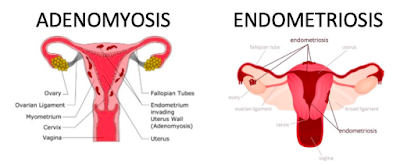
When I was first diagnosed, it was just a massive relief.  I finally had some light shed on my more recent, severe issues plus decades of other issues.  I didn't really feel sad.  Just grateful to finally have some answers.  I finally felt some kind of validation.

But what these conditions mean for me in real terms are something else.  I still haven't processed this reality.  And it's easy to understand why.

The 'Tired Mum' trope does not serve me       

Firstly, I am not very unwell all of the time.  I am exhausted, but this is something that doesn't always register with myself, or others as relating to my illness.  I'm a Mum.  Lots of Mums are tired.  I'm a working Mum.  Working Mums are tired.  My pain levels are erratic.  In the past they have been so bad I could not go to work because I struggled to stand up for the length of my shift.  At the moment, my pain is manageable with minimal pain relief.  I have dyspareunia which is fairly bad all the time, but isn't something that affects anyone besides myself and my partner.  In the overall scheme of things, it doesn't seem all that bad because I am still able to work and look after the kids.

Secondly, I don't talk about it much.  It's not that I'm embarrassed, it's just that it's awkward.  Those closest to me seem bored, or even annoyed if I talk about it.  And when I talk to those more on the periphery of my life it feels as if they think it's a ploy for sympathy.  Almost everyone* I talk to has a level of 'ways we can fix this' in what they say.  Or a resigned boredness in hearing what I have to say yet again.  And that's hard because these are chronic illnesses.  While there are things I can do to minimise some of my symptoms, there is no cure.  This is my life.

The reason I'm writing now is because I read this article recently and saw, for the first time, this cycle:


And it just resonated.

Since the onset of adenomyosis, this cycle has shaped my life.  And diagnosis of my illness has not changed that.  I'm equally stuck in an exhaustion cycle.  I feel guilty for not spending enough time with my kids, my partner, my friends and family.  When I try to spend more time in these areas, I get more exhausted which makes it trickier to spend any more time and makes me feel like I'm failing as a partner/Mum/friend.  This reinforces the anxiety I face in attempting to spend time with friends.  And this reinforces my sense of isolation.  Equally, I know that if I exercise more, it will help me manage my weight better.  But to have extra money to go swimming (the easiest exercise for me) I need to work more, which makes me more exhausted, and then struggle to have the energy to exercise.  Being stuck in this cycle really sucks!

And the only place I can talk about this stuff is online.  Online it's easier to find people who actually understand.  Equally, I can take my time in trying to articulate how I feel.  Exhaustion and anxiety make real life conversations difficult and frustrating as I often struggle to convey in real time what I mean because my brain is too tired.  I also cry more easily because of the hormone overload, and this makes IRL communication even harder.  Where I used to see friends regularly enough to talk through the big stuff, these days this feels increasingly difficult.  For me, online support groups and friends are truly the best support.**  This is also why I blog.


*          *          *          *          *          *          *          *          *          *          *          *         

I have no idea how to exit this cycle.  But I do have some ideas about what would help me, or might help others like me.  You can find some more general ways of supporting someone with chronic illness here.  Here is my wishlist.

While I know many of these symptoms can
be attributed to other things, with 10% of 

all women suffering from this condition,
surely it's worth looking into sooner?

  • More recognition of chronic illness by health professionals

    It should not take so many years for so many of us to receive a diagnosis (8 years is the average time for endometriosis).  Prior to a diagnosis I felt (and was often called) a hypochondriac, too 'sensitive' and a drama queen.  Basically, I was told there was nothing wrong with me and all the issues I was having were in my head.  This does not make for good mental health!  I know GPs cannot possibly know everything.  But I feel like if they were under less time pressure, they could listen better and would have a better chance to accurately assess symptoms and refer on as necessary.

    We should not have to push to expect regular follow up post diagnosis and a more supportive health system.  Even with a diagnosis, I feel like a drug seeker when I try and access any meds stronger than paracetamol.  There are women with my condition who are bedridden.  While I am not bedridden, it does not mean I am not sometimes in a great deal of pain.  If I didn't regularly have my pain minimised by health professionals, and if they actually checked in with me on how I was going with some regularity, it would make a huge difference to my self esteem around my illness.
  • More awareness generally
    If there was more general awareness of many chronic health issues it would help make those of us with them feel more accepted by society.  What we live with would be legitimised, so our diagnoses might not affect our self esteem so much.  I feel like I have to be my own cheerleader much of the time, and this is difficult to maintain given my low energy levels.  More awareness would allow more empathy to filter through and hold us up.  It would make some space for easier conversations which would make it easier to seek support.
  • Illness specific subsidised counseling
    I tried going back to regular (free) counseling through a local womans centre (free) because non-community counseling is damned expensive!  The place was lovely, but the lack of time flexibility meant that it was difficult for me to go due to childcare and work commitments.  I did not want to have to see someone else, as would have to explain my diagnosis all over again, which is difficult.  If once diagnosed you were referred to counselors that specialised in certain chronic illnesses, this would be so much easier to negotiate.
  • Support groups for partners
    It is not easy living with someone with chronic illness.  This is apparent.  It's something that causes constant friction in my relationship, and I believe this would be helped greatly if there was better support available for partners of people with chronic illness.  Whether it takes the form of subsidised counseling, online groups or a meet up - I do not know.  But I know having something would definitely make it easier for them to also feel less alone.

    This has gone up to $21.15 this year 
  • The Living Wage
    If I earned a living wage I would feel less guilty about working part time and more able to support both my family and my health needs.  I think this is particularly pertinent for fairly functional people with chronic illness as I suspect (like me) many choose the kinds of work that require less energy or responsibility to better manage other aspects of their lives**.  For me, this would make a difference of around $40 per week.  This doesn't seem like much but would make a huge difference.  It would mean I had enough to spend a little more on health or childcare or to support my general wellness.  And I am speaking from a position of privilege.  I cannot even begin to imagine the difference this would make to someone in my position that was a sole parent, or sole earner.
  • A Decent Sickness Benefit
    Equally, if I were unable to work due to my chronic illness I would hope there was a decent financial support available for me.  My mother is in exactly this position, and is still expected to be seeking work even though some days she can barely stand up (due to changes to WINZ by our prior government who eradicated sickness benefits).  While benefits are now being indexed to inflation, as yet no changes are being made to bridge the gap from the many years prior that this did not happen.  Currently, it is very difficult even for those who are well to maintain basic health on the money received from a normal benefit in New Zealand, and even harder if you have an existing illness that requires ongoing medical treatment.
  • A bit of kindness and respect
    Just be kind


    My illness does not make me incompetent.  When people ignore my feelings or experience, it does not make me inclined to trust them.  And the more often this happens, the less likely I am to reach out for support generally.  This is a pretty common response.  If you care about someone with chronic illness ask what we need in terms of support.  Respect our boundaries and limitations, and understand that they are in place for a reason.  Just listening and respecting us really does make a world of difference.

*  Besides my Mum.  Having been through similar health stuff she is pretty good at understanding how I feel.  But equally, we need more than just each other as each of us have limited energy resources which is tough.  We both want to help each other so much, but we can only do so much without making ourselves more ill.  And other friends with chronic illness get it too.

** At the moment also I have more peer support at work in terms of my illness than I think I would have anywhere else.  It's one of the pros of being in an almost entirely female workplace.  The downside of this is the gender pay gap associated...


Monday, 7 January 2019

New Year Fresh Start

Happy New Year!

I am not a New Years person. I am generally one who hunkers down and is in bed before midnight and have never been one for resolutions.  But this year I'm doing things differently*.
 
The metoo movement has actually been around for more than ten years now.
It was the Weinstein allegations and Hollywood that popularised it last year.

Last year was a tough year.  I think for most people.  I'm not sure what it was, but it felt like a year of a lot of change.  And I think it was tough because coping with change is tough.   In global ways with the #metoo movement gaining momentum sparking friction in gender politics and in local ways via Grace Millane's murder making more Kiwis aware of our atrocious rates of violence**.

On a personal level 2018 brought many changes too.  It was a year of conflict, and a year where I had
no choice but to learn how to manage conflict differently.  That it's just not possible to please everyone all the time.  That sometimes it is best to just put your energy where it is needed most, where it most resonates with your values.  That choices come at a cost but that cost is necessary.  I learned conflict is part of life and I have to learn to live with it rather than let my fear of it consume me.

Most folk know endo, when I was diagnosed
with adenomyosis I had never heard of it before.


2018 also brought me new health diagnoses which, whilst not a total shock, have been a struggle to come to terms with.  I have been reluctant to make the changes necessary to best manage myself due to no reason other than choosing to prioritise short term happiness over long term wellness.  Whilst I think this is an understandable response, it was certainly not the best response in terms of health.

And when my mental health started to fall by the wayside, an understandable result of processing such big changes, I had to make sacrifices in my art practice to get my health back on track.  This meant opting out putting on an exhibition of recent work.  It was a difficult decision to make, but definitely the best decision***.  In spite of all these changes and health crises I still managed to write one short story a month as I set out to do at the beginning of the year.  And I managed to get one of those stories published.

So while 2018 was a hard year, it was a productive year.  It was a year with a steep learning curve.  It was a year of struggle precisely because it was a year of change.  And change is hard for all of us.  But change is important.  2018 taught me that even though I might not feel like it, I can be quite resistant to change - both positive and negative.  For 2019 to be a better year I need to stop resisting.  I need to start to work within the change.

I am so loving watching these two grow up.   
I want to be here with them as long as possible.
And I need to do that simply.

And quite simply, when I weigh up the importance of all the facets of my life the two most important things are my family and my health.  And without my health, I cannot do what is best for my family.  So this years focus will be my health.  It feels weird not having an art project to work on, but I have to shift my thinking and view my health as one of my projects.

I also have to do this slowly.  I have a tendency to run gung-ho into projects and plans and then lose steam shortly after starting.  This needs to be different.  This needs to be a sustainable plan for life.

So, simply, my plan is this: to put in place three small things every six weeks that will be beneficial to my health.  Six weeks so I can focus on just those things.  Six weeks so I can build a habit and maintain those habits before I begin working on forming new ones.  Six focused weeks of small changes.

To start with I am doing the following:
  • Eating a healthier breakfast
  • Drinking plenty of water
  • Eating 5 + a day every day
These three things may seem small.  But they are three basic things I haven't been maintaining.  I am pretty good with drinking water most of the time, but sometimes I do forget.  I am embarrassed to say my former regular breakfast included cheese**** - not ideal for someone with my current health issues.  And 5+ a day - we should all be eating 5+ a day, right?  Well, I haven't been.  And I LOVE most fruit and vegetables.  I was vegetarian for 12 years.  So I should be managing this no problem.  But I haven't been.  I have always found it hard to snack on fruit due to preparation requirements and mess, and with losing my favorite fruits to the 'shouldn't eat' list post diagnosis I was seldom eating fruit at all.  So all of my veges were crammed into dinner and even then it wouldn't have been 5+ servings most days.

LOVE this yoghurt!

So far I've maintained this change for a week.  I've managed this by doing things I know will work for me.  I changed up my breakfast from GF toast with ridiculous toppings to muesli with probiotic yoghurt and fruit (currently blueberries - thank you Summer!) which also gets me a headstart on the 5+ quota.  To increase my vege intake in other areas I've started making a simple carrot and lentil soup, and when I feel hungry I just have half a cup of that which contains about two servings of veges.  And I have started trying to have an afternoon fruit snack - I am better at doing this when I'm at work.  Just that gives me 4 serves before dinner.

It's a huge change for me.  But by just making little tweaks it's achievable which means it's hopefully a change I can maintain.  It's only been a week but I have managed to do these three small things every day.  And that's because they are just three, simple things.

And I already feel better!  Eating more fruit and veg plus drinking more water has helped me be a bit more regular in the poop department which in turn, takes the pressure of my painful lady organs.

On the tail of a tough 2018, I think making three small changes to better your life is not a bad idea.  It might not be 5+ a day for you, it might be about watching less Netflix or reading more books.  But if you do want to try my delicious carrot soup (because it is super delicious) I have the recipe below for you.  Like the rest of this years plan, it is very simple.

Carrot and Lentil Soup
 
Ingredients:
 1 tsp cumin seeds
1 tsp grated fresh ginger
1/2 tsp ground turmeric
A sprinkle of chili flakes
1Tbsp olive oil
300g grated carrot (about 3 large carrots)
3/8 of a cup of lentils (I use red but brown is better on your tummy)
500mls vege stock (I use Massels, vegan and gluten free)
1/4 cup of milk or coconut milk

Directions:
1)  Heat a large pan to a medium high heat.  Add the cumin seeds, turmeric and chili flakes and toast until fragrant (about 1 minute).  Add the oil and ginger and cook a further minute until you can smell the ginger.
2) Add the grated carrots and lentils and stir through until coated in the spice mix.
3) Add the stock and simmer on medium low for about 15 minutes until the lentils are soft.
4) Take off the heat and stir through the milk.  Let cool for about 15 minutes
5) Blend (I use a stick mixer) then season to taste.

This makes about 750mls of soup, so about 6 half cup serves of soup.

*  Not the New Years Eve part.  A last minute invite meant I did attend a party (next door), but due to codeine was drunk after just two large glasses of wine, so went home around 8pm, ate toasted sandwiches and was asleep by 10pm.  Great way to miss out on all the fireworks.

** It still saddens me that a foreign, white, pretty, privileged girl had to die before this happened given that this happens to women here on the reg but hey, if it helps change our culture of violence I'll take it.

*** I was struggling with basic social interactions at that time.  The thought of hosting people that were assessing my work was definitely not something I could have managed well.

**** GF toast with mustard, cheese and cucumber

Friday, 30 March 2018

On Living With Pain

Pain is a tricky thing to talk about.  It is subjective - one person's 8 on the pain scale may be another person's 5.  Regardless of this, pain is something we should all take a little more seriously in terms of how we see our own health, and that of others.

Recently I got some gastro bug thing - which is fairly regular occurrence now I'm a parent of small humans.  It was bad enough that I felt super wiped out and had to take time off work.  But I thought it was just a regular tummy bug - I was glad it was just 'poos' and not 'poos and spews'.  A few days later, Murray caught my bug.  He also had to take time off work, but what was different for him was the pain.  He described it as the worst abdominal pain he'd ever experienced - like vices gripping specific areas of his stomach.  Because his pain differed so much from what I'd experienced I was concerned.  Maybe he didn't have what I had?  Maybe he had appendicitis?

       Me in Auckland hospital
for my second ectopic pregnancy


When we quickly realised this was not the case, we postulated theories as to why his pain was worse.  The most logical one we could come up with was that because I have regularly encountered abdominal pain (IBS, ectopic pregnancies, ovarian cysts, prolapse) my body may have acclimitised to pain - maybe his 9 on the pain scale is a 5 for me.

Current scientific research tells us that actually the opposite of this is true.  People who suffer from chronic pain conditions can become more sensitive to pain as the nervous system's function is altered by overuse.  This led me to wonder if, given my health history, my nervous system experiences pain as it's supposed to.  Has something that was once a 5 on my pain scale crept up to a 7?  And if it's supposed to be a 5 and not a 7, does that mean I'm worried over nothing?

A terrifying diagram of BV                   

I am pretty sure I'm not the only person to question whether the pain I experience is 'real'.  And I think the main reason I question this is not because of the newly learned information above, but because the medical profession rarely seems to take my ongoing pain seriously.   To give a recent example, since giving birth to Etta (nearly 5 years ago), sexual intercourse has been painful.  Initially, it was excruciating - penetrative sex was not really possible for the first six months post labour.  When I finally got brave enough to tell my GP he told me that bacterial vaginosis was the obvious cause of my pain.  Unsurprisingly*, his treatment plan for BV was only mildly helpful. But because he had physically examined me and found nothing obviously wrong previously, and because his manner made me doubt my pain was 'real', I was anxious about bringing it up again.

Since then, when asked about whether I needed birth control I have routinely said that because I am exhausted and it is painful, I don't have sex enough to justify using it.  On zero occasions has that elicited a worded response, or advice, from a single GP**.

My mother has suffered from debilitating abdominal pain for my entire living memory.  She had a full hysterectomy when she was younger than I am now in an effort to alleviate her pain, which later caused further complications.  When I told her I was writing this and asked for her input she said '..my abdominal pain*** is generally always ignored, not mentioned at all.  I have to bring it up and no-one has ever questioned me about it and my GP does not factor it in as a reason for me not being able to work but is happy to issue me prescriptions for pain relief every time I go.'

From the countless first-hand anecdotes, blog posts, articles and statistics I've read, our experiences are not unusual.  And as a common experience this does every person suffering from undiagnosed chronic pain a disservice.  Because aside from the obvious social outcomes**** of living with chronic pain, the physiological outcomes of chronic pain are massively under-rated.

Chronic pain affects almost every endocrine system in the body.  This can lead to changes in insulin glucocorticoid states.  What this means in regular speak is that ongoing pain changes how we metabolise lipids which affects the system that sends chemical messages through our bodies (via hormones).  This can lead to further health conditions including mental illness, muscle weakness, osteoporosis, diabetes and changes to metabolism - weight gain or loss.  Not only this, but recent studies have shown that chronic pain can lead to indolent hypertension and tachycardia, which in turn can lead to heart attacks and strokes. 

So living with chronic pain can (and does) literally kill people.

And, of course, pain is the body's way of telling us when something is wrong.  When you cut yourself chopping veges, you (usually) feel pain.  When you fall over trampolining and sprain your ankle, pain is one of the things that indicates the severity of your injury.  When you have appendicitis, sharp pain when pressure on the appendix is released indicates to medical professionals what their likely diagnosis is.

When we, or medical professionals, ignore that pain we can be missing the body's most obvious signal that something is wrong.  In most cases, pain is indicating a condition that is treatable, or at least, manageable.  In some cases, chronic pain is indicative of life threatening illnesses, like cancer.  In these cases, a late diagnosis could turn a treatable illness into a terminal prognosis.  When medical professionals ignore ongoing chronic pain they are ignoring the well-being of their patients.  Which seems pretty counter-intuitive to me.

*             *            *             *             *             *            *             *

So why isn't pain taken more seriously?

I'm going to postulate some theories here.  The first theory is backed my quite a bit of research and is something I've written about before.  Most of the examples I have of medical professionals ignoring pain are ignoring womens pain.  Studies have shown that women's pain is taken less seriously than their male counterparts.  Why is this?


Sexism.  I don't think I need to say much more than that.  Those old stereotypes that men are strong and are not allowed to show weakness affect how they are treated when they do.  If a man actually goes to the Dr it may be assumed he must be probably very ill, if not dying.  Conversely, the stereotype of women being hysterical, emotional and oversensitive could lead professionals to downgrade their first hand accounts of what his happening to their bodies.  Until we can push these old fashioned notions out the back door, I doubt we're going to see much positive movement forward in terms of better support of and higher diagnostic rates of womens issues.

       'Easy for you to explain'...

My other theory - based on personal experience alone - is that Drs just do not have time to talk to their patients to diagnose anything other than simple ailments.  I think this is why many people turn to more holistic treatments for help.  At a GP's office, a standard appointment slot is 15 minutes.  At an osteopath, homeopath or acupuncturist the usual amount of time for initial consult is an hour.  I think this is why, in spite of copious trips to the Dr complaining of chronic exhaustion at age 20, it was a homeopath rather than a Dr that thought to test for Epstein Barr virus.  So while the GP signed off on the bloods (because obviously homeopaths can't), I would never have gotten a fairly simple medical diagnosis if it were not for the homeopath asking a bunch of questions no Drs had bothered asking previously.

Basically, I think women's health issues often fit into the 'too hard' basket.  And because they do not have time and work in what is often a high stress environment, GP's will often just prescribe the pill and paracetamol and send us home.  For many gynecological conditions symptoms are inconsistent and not always presenting at the time of the consult*****.  But in these instances, women with recurring pain should be referred on for scans, and if still unresolved to gynecologists or gastroenterologist or urologists until a solution can be reached.  I wonder if the reason this doesn't happen is because the public health system is so overloaded Drs are discouraged from making referrals?  I can't think of many other logical reasons why this would happen.

And my final theory is that women don't always tell their Drs all of their symptoms.  This sounds stupid, but it can be hard to talk about pain - especially in areas we are not exactly encouraged to talk about.  Many of us are raised by stoic or prudish or shy parents.  We are also raised within a society that can't even talk about vulva's accurately.  This, combined with GP's not always asking as many questions as they should, is not a great equation for women's health.  I mean, if you've met me, you'll know I'm fairly forward, relatively educated and big on women's rights.  I still freeze when confronted by most medical professionals because I immediately feel I am somehow less than - unimportant.


And this patronising Dr doesn't make it any easier to want to talk
about vaginal discharge

It feels to me, as though you need to have an education on how the health system works to get any currency out of our current public health system.  Either that, or have private medical insurance and an education in health yourself.  This seems massively unjust.  And while I think a large part of the problem is financial, an equal part is social.  We need to know our rights.  We need to understand our bodies.  We need to feel valued enough to give our pain a voice.

* Just want to say I have had BV countless times and I knew it was not the cause of such extreme pain, but he was the Dr, so I humored him.

** I did get a sombre knowing nod from a female GP once, but no further engagement on the topic.

*** Mum has suffered sharp pain in the same specific place in her abdomen since her final ectopic pregnancy (she had three).  It is very likely given her medical history, that this pain is due to scar tissue forming in that area that has hardened.  Regardless, it has never (her pain) been validated by medical professionals.  She has still not been referred to the the pain clinic, when both of her brothers [pre Auntie Shaz's transition] who also have chronic pain conditions, were sent not long after diagnosis.


**** I think these should be fairly apparent, but just in case they aren't some of these may include anxiety, depression, addiction issues, insomnia, inability to participate in regular social activities, inability to go to work, inability to exercise, inability to participate in a normal family life, inability to exercise proper self care plus a tonne of other things.  Just think about the level of function you have when you are in pain, then try and imagine how that looks when you suffer that much all the time.

***** They tell us to try and come in when pain is presenting, but with long wait times and Drs with busy schedules, this is not always feasible.  And not everyone can just drop everything they're doing to drive to the Drs and wait for an indeterminate amount of time to maybe get some help.  And for those of us who have been disappointed by Drs countless times, it is hard to believe that, even if we do get there on time, it will make any difference in terms of getting an answer.